
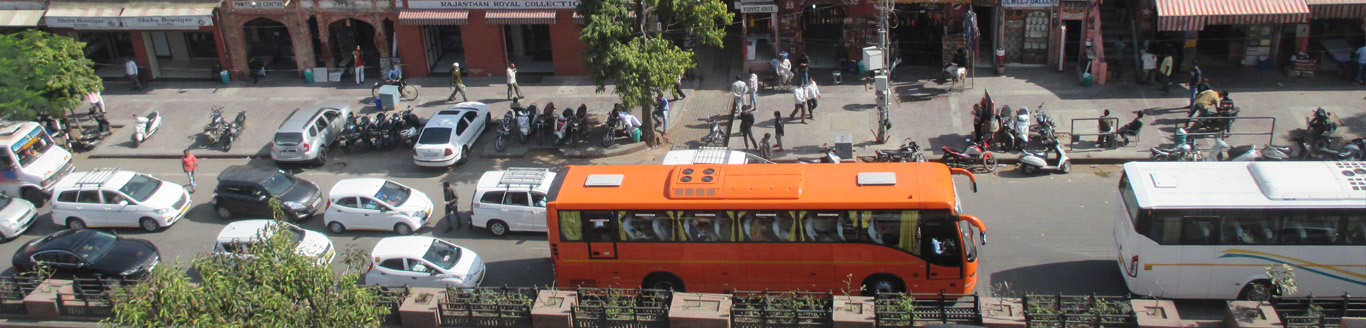

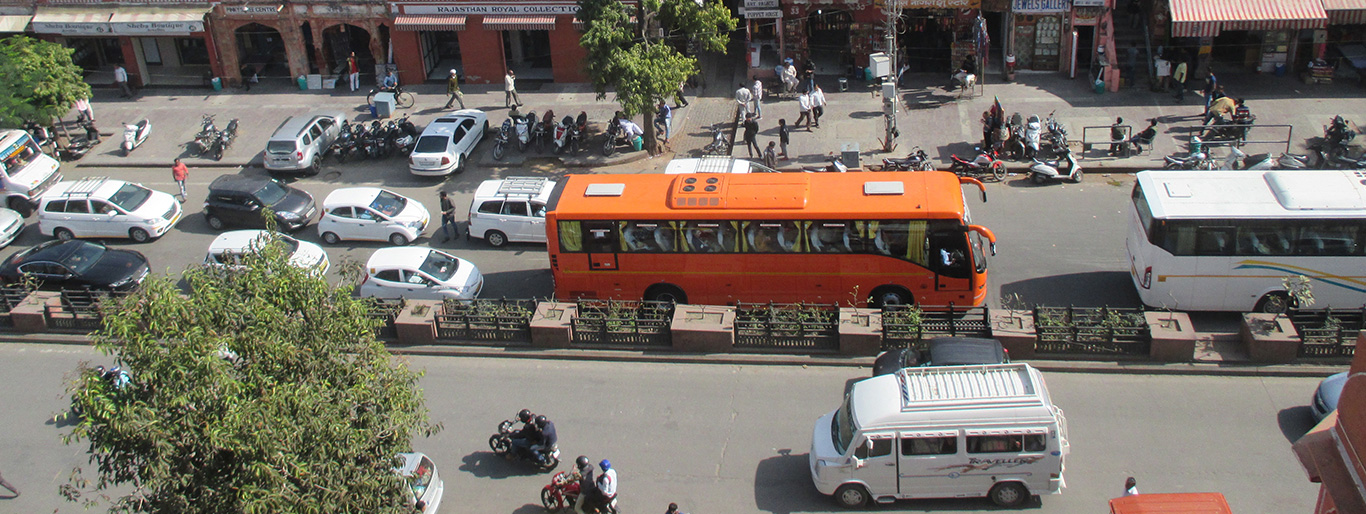
Urban streets are shared public spaces where pedestrians, cyclists, children, elderly citizens, street vendors, and motor vehicles interact daily. Yet, speed limits in many Indian cities remain closer to highway standards than those designed for human safety. According to the Ministry of Road Transport and Highways’s Road Accidents in India 2023 report, 35,221 pedestrians died in road crashes in 2023, accounting for 20.4% of total fatalities. In urban areas, pedestrians constitute nearly 31% of road deaths, highlighting the vulnerability of people walking in city environments. If India is serious about reducing urban road fatalities, adopting 50 km/h as the maximum speed limit in urban areas is a necessary reform.
Speed directly determines crash severity. The human body has limited tolerance to impact forces. Global research shows that when a pedestrian is hit at 30 km/h, the chances of survival are significantly higher, beyond this speed, the likelihood of survival decreases dramatically. At intersections, side impact crashes are generally survivable up to 50 km/h, but the risk of death rises sharply beyond this threshold. This is not merely a behavioural issue; it is physics. Higher speed means longer stopping distances, reduced reaction time, and greater impact force.
India’s legal framework provides the authority to regulate speeds, but its application remains limited. Under Section 112 of the Motor Vehicles Act, 1988, the Central Government prescribes maximum speed limits, while state governments and designated authorities may set limits for specific roads or areas. Section 115 further empowers them to restrict or regulate vehicle use on roads in the interest of public safety or convenience. The Motor Vehicles (Amendment) Act, 2019 also strengthened penalties for speeding under Section 183, making enforcement more stringent.
However, the legal framework largely addresses maximum speeds that remain higher than global best practices, while rationalising penalties. Although state governments are empowered to set appropriate speed limits for the specific categories of roads, this is often either not done or, where implemented, not based on scientific assessment.
Urban roads are mixed-use corridors. A single stretch may include schools, markets, bus stops, and residential colonies within a few hundred meters. Applying uniform high-speed limits across such environments ignores the vulnerability of non-motorized road users. Cities must move away from designing roads for “maximum vehicular throughput” and instead prioritise “maximum human safety.”
Globally, several cities have adopted 30 km/h as the default speed limit in residential areas, recognising that lower speeds reduce crash severity and save lives.
A powerful illustration comes from West Bengal, which in early 2025 officially adopted a context-specific speed management policy informed by road type, traffic conditions, and injury risk. Under this policy:
- Urban roads are capped at 50 km/h,
- Market and residential streets at 30 km/h,
- School zones at 25 km/h, and
Recognising that different streets carry different risks, the policy is supported by enforcement through speed cameras by the West Bengal Traffic Police, with Kolkata beginning to adopt scientific speed management practices.
Another state moving in this direction is Rajasthan, where speed management guidelines have been drafted under the state’s Road Safety Action Plan and are in the process of notification. Notably, the proposed guidelines reduce urban speed limits to a maximum of 50 km/h, in line with World Health Organisation (WHO) recommendations. The upcoming 10-year Road Safety Strategy also includes provisions for speed calming, speed audits, and technology-enabled enforcement, along with a pilot speed management programme.
For Indian cities, adopting a 50 km/h maximum speed limit would require regulatory clarity and supporting infrastructure. Urban local bodies and traffic police must undertake scientific speed zoning based on road function, land use, and pedestrian density. Streets should also be redesigned with traffic calming measures such as raised crossings, narrowed lanes, and speed tables, supported by effective enforcement through speed cameras and e-challan systems.
If India aims to meaningfully reduce urban road fatalities, effective speed management must become central to policy discussions. Aligning infrastructure design, enforcement mechanisms, and the safety needs of vulnerable road users is essential to creating safer urban mobility systems.
Safer cities begin with safer speeds. The question is not whether we can reduce speed limits, it is whether we can afford not to.
Co-Authored By: Madhusudan Sharma, Senior Programme Officer & Shreni Jani, Research Associate, CUTS International, Member of Road Safety Network, India
road safety